EN
EN
 AR
AR
 BG
BG
 FR
FR
 DE
DE
 HI
HI
 IT
IT
 JA
JA
 KO
KO
 PT
PT
 RO
RO
 RU
RU
 ES
ES
 TL
TL
 IW
IW
 ID
ID
 LV
LV
 LT
LT
 SR
SR
 SK
SK
 SL
SL
 UK
UK
 VI
VI
 SQ
SQ
 GL
GL
 HU
HU
 MT
MT
 TH
TH
 TR
TR
 AF
AF
 GA
GA
 BE
BE
 MK
MK
 HY
HY
 AZ
AZ
 KA
KA
 BN
BN
 BS
BS
 LO
LO
 MN
MN
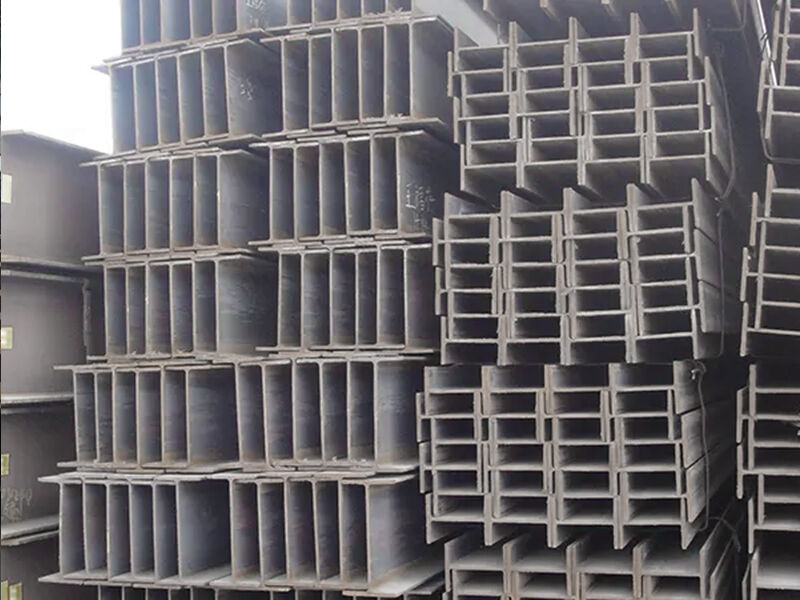
This element of the modern building is a steel beam of the H-shape or I-shape as it is the part of the building more than a century old, and its work is gaining even more significance. Designed in the most efficient way, this structural member is named after its distinctive shape of a cross-section resembling both capital letters H or I. It is never an old technology, but a constantly evolving solution, which accompanies the realization of the future, in terms of skyscrapers and long bridges and even strong industrial buildings.
The Anatomy of Efficiency
The H-beam is done sustainably because it is optimally allocated in terms of material. It possesses two parallel flange cross-section and is connected with a vertical web. Such an arrangement leaves most of the material in the flanges, far away because of the neutral axis (mid-point of depth of the beam), and which is more effectively put to use in bending moment resisting. The web is primarily involved with shear forces. The result of this is extremely large strength-mass ratio, or that constructors are able to achieve greater span and support greater loads with less material than solid beams or other cross-sections, which results in a saving of cost in terms of material as well as transport.
Current Applications: The Backbone of Modern Infrastructure
Many industries nowadays cannot be done without H-beams:
High-Rise Construction: These are the main frames of the skyscrapers and business buildings of big size that provide the necessary flexibility and strength to the open floor plans.
Bridge Building: Bridge buildings are layered in the girders of highways and railways, thus it is necessary to be able to resist at a long distance.
Industrial Projects: H-beams are also used in the heavy-duty frames and crane tracks of power stations, warehouses and manufacturing facilities.
Residential Construction: This is gaining acceptance among the new residential homes and in the multi-unit residential construction as they have long life and are constructed within a brief time.
The Evolving Future: Trends and Innovations
The development of the future of H-beam is being defined by the developments of the materials, designs and sustainability and securing its orientation in the next-generation engineering:
High-Strength and Hybrid Steels: Stronger yet less weighty beams can be made with the advent of high-strength low-alloy (HSLA) steels and the higher grades. This enables the thinner and more elegant structural designs to be developed with longer spans reducing the number of columns that are needed as well as increasing the amount of space that can be used. Experiments with hybrid beam, where web and the flanges are produced of dissimilar grades of steel, are tailored towards the requirements of the loads, and extend the efficiency boundary.
Computational Design and Optimization: Building Information modelling (BIM) and state-of-the-art computerized finite element analysis (FEA) enables engineers to simulate and optimize the performance of beams with breathtaking precision. This enables the custom or non-standard areas that would only use the material where it is structurally necessary and thus the waste is minimized, besides enhancing the natural efficacy of the I-shape.
Sustainability and Circular Economy: Steel is the material that is most recycled in the world and the H-beams are the essence of this green advantage. The beams can be recycled in making more steel products towards the end of building life and also there is no quality compromise. Modern production strategies also aim at achieving the desired amount of carbon footprint in the steelmaking process. One of the direct contributions of more sustainable construction is the efficient design of H-beams, which will need less material to be accomplished to complete a larger work.
Seismic Design and Resilience: The ductility of the steel is the most significant in those territories where earthquakes are common. H-beam moment resisting frame is developed to take in and absorb seismic energy through controlled bending and deformation, ensuring the integrity of the entire structure and saving human lives.
Modular and Prefabricated Construction: H-beams are prefabricated in terms of standard size and predictable behavior, which are conducive to off-site prefabrication. This augers very well with the present day tendency of modular construction where entire parts of the building are manufactured in factories and then assembled on-site which is an extremely rapid cutting down of construction time, cost and waste on-site.
Conclusion: An Enduring Pillar of Progress
The H shaped or the L shaped steel beam is not a section of stagnant century old invention. It is an evolving aspect that is evolving in material science, digital innovation as well as growing attention on sustainable and resilient design. It has the most appropriate ideology of efficient use of the material and is therefore placed best to accomplish the future objectives of engineering: building higher, longer, smarter, and greener.
When dealing with projects where the reliability and usefulness of good structural steel is needed, one must work with a knowledgeable supplier. Shandong Runhai Stainless Steel Co. Ltd has large inventory of steel product consisting of full line of structural H-beam and I-beam that meet the accepted standards of the nation as well as those of the international standards. Our warehouse management and logistics networks are properly developed and allow serving the multidimensional needs of the construction, power and industrial segments efficiently and reliably, and we possess our good background in domestic supply chains.